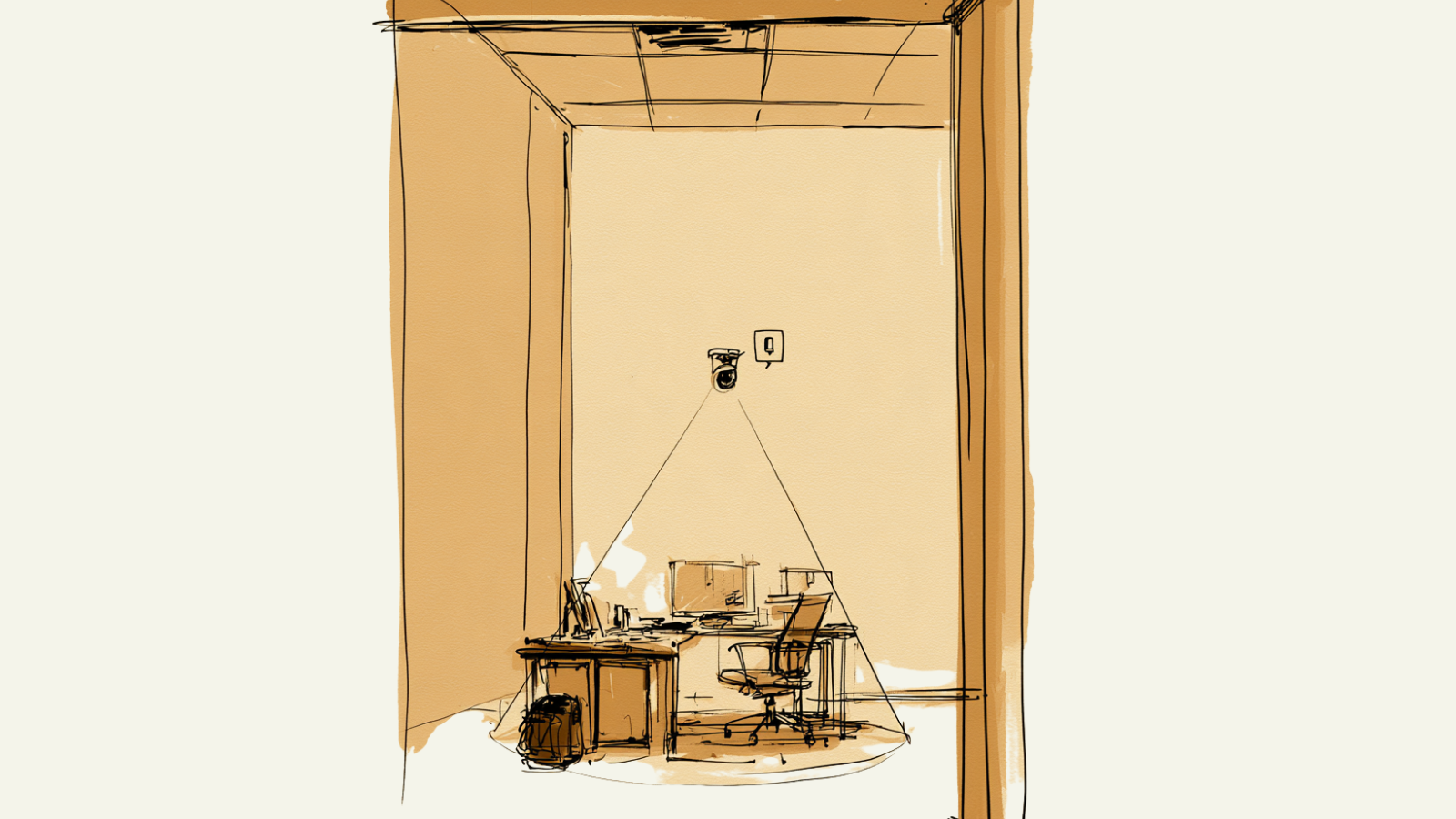
Can My Employer Record Me on CCTV Without Telling Me?
Video-only surveillance is legal in most states without telling you — audio recording is a different story.
Often, yes — for video-only cameras covering an open work area, no federal law requires your employer to tell you about it, and most states don't either. Courts generally treat video monitoring as legal if there's a legitimate business reason, like security or loss prevention, and it doesn't extend into places where employees have a genuine expectation of privacy, like bathrooms, locker rooms or changing areas — recording there is illegal essentially everywhere, notice or not.
Audio is a different and stricter question, because it's governed by wiretapping law, not just workplace privacy rules.
Under federal law, recording a conversation is legal with the consent of just one party to it — which could be the employer's own consent, as the one "party" installing the system. But about a dozen states, including California, require all parties to a conversation to consent before it can be recorded, and that applies at work too.
What you're entitled to
- To not have hidden cameras — with or without audio — in bathrooms, locker rooms or other areas where you have a clear, recognized expectation of privacy; this is illegal in essentially every state.
- In states with all-party consent laws for audio (including California, Connecticut, Florida, Illinois, Maryland, Massachusetts, Montana, Nevada, New Hampshire, Pennsylvania and Washington, among others), to know that a conversation is being recorded before your employer records your audio at work.
- In states such as Connecticut and Delaware, which have specific electronic monitoring laws, advance written notice of the fact that your employer uses electronic monitoring, generally posted or given in writing before monitoring starts.
- In California, disclosure that video surveillance is taking place, even though video-only recording there doesn't require you to formally consent.
What your employer can't do
- Place a camera, hidden or visible, inside a bathroom, locker room or similar private space, in any state.
- In an all-party consent state, record your conversations with audio without your knowledge — doing so can expose the employer to real penalties, not just a complaint.
- Use surveillance specifically to monitor or intimidate employees engaged in legally protected activity, such as discussing wages or organizing — this can violate federal labor law regardless of what state you're in.
- In Connecticut or Delaware, start electronic monitoring without the advance written notice those states specifically require.
Exceptions
The core exception here is simply which state you're in — this is one of the most state-by-state areas of workplace law. Whether video-only monitoring requires any notice at all, whether audio needs one-party or all-party consent, and whether there's a specific electronic monitoring notice law layered on top, all depend entirely on your state. A workplace with locations in several states may follow different rules at each one. If a union represents you, your employer generally needs to negotiate with the union before introducing new surveillance.
What to do
- Check whether your state requires one-party or all-party consent for audio recording — this determines whether silent video cameras and audio-recording cameras are treated the same way.
- Check your employee handbook or any posted notice for a surveillance policy — many employers disclose this in writing even where it isn't strictly required.
- If you find a hidden camera in a bathroom, locker room or similar space, this is a serious matter in every state — document it and consider contacting your state labor department or an employment attorney.
- If you're in an all-party consent state and believe your employer recorded audio of you without your knowledge, you can raise this with your state attorney general's office.
Related questions
Official sources
Rules on audio and video consent vary significantly by state. Check your specific state's wiretapping and electronic monitoring laws before assuming either way.