
Healthcare costs, insurance, and the financial risk of getting medical treatment in the US, UK, Germany and Spain — with an original dataset, real documented cases, and the gaps we couldn't fill honestly stated.
David is 58 and lives in Ohio. For the past six months, his hip has been getting worse — stiff in the morning, painful on stairs, impossible to ignore anymore. His doctor tells him what he already suspected: he needs a hip replacement.
David has health insurance through his employer. He pays his premium every month, has done for years, and has always assumed that if something serious happened, he'd be covered. And he is — but "covered" doesn't mean "free."
Before the surgery even happens, David has to work out what his plan's deductible actually requires him to pay first, what percentage of the remaining cost falls to him as coinsurance, whether his surgeon and hospital are actually in his insurer's network, and what his annual out-of-pocket maximum is — the ceiling past which, in theory, he stops paying. He finds out that a routine, medically necessary procedure can still leave him owing several thousand dollars, depending on decisions made months earlier by an insurance company he's never spoken to.
David's situation is illustrative, not a documented case — a composite built to show how the pieces of a real bill actually fit together. But every piece of it — the deductible, the coinsurance, the network rules, the out-of-pocket maximum — is real, and it's the same basic structure millions of insured Americans navigate every year without fully understanding it until the bill arrives.
And in some countries, David wouldn't be doing any of this math at all. Not because the treatment is free — nothing is — but because the cost is collected somewhere else entirely: in taxes, in mandatory contributions, in a system that decided, at a policy level, not to hand this particular decision to the patient. In other countries, David might not be paying much at all — but he might be waiting considerably longer than he would in Ohio.
This investigation asks a simple question: what does getting sick actually cost — and who is really paying for it?
We compared four countries with genuinely different ways of answering that question — the United States, the United Kingdom, Germany, and Spain — across four common medical treatments, using primary sources, official data, and documented real cases wherever they exist. Where the data doesn't allow a fair comparison, we say so, rather than force one.
When someone says "healthcare costs $X in America," they could be talking about entirely different things: the hospital's listed charge, the amount an insurer actually negotiated down to, the amount insurance covered, or the patient's own final bill. The same confusion applies, differently, to every country in this investigation.
So before comparing anything, we built our own methodology — three separate cost layers, applied consistently to every country and every treatment:
An annual cost, paid whether you use the system or not: an insurance premium, a mandatory payroll contribution, or a share of general taxation.
Broken into up to four figures where the data allows: the listed/billed charge, the negotiated or cash price, what insurance actually covers, and what the patient pays out of pocket.
Supplementary private insurance, shown separately, never treated as a country's base case.
Total real cost = Layer A + Layer B (+ Layer C where relevant).
We used one standard profile per country — employer-sponsored insurance in the US, standard NHS with no private top-up in the UK, statutory GKV in Germany, and public Seguridad Social in Spain — and a strict source hierarchy: government or regulator data first, then international bodies with public methodology, then peer-reviewed studies, then investigative journalism with cited primary sources. Never blogs or commercial insurance-comparison sites. And where a country simply doesn't have a comparable figure, we say so in the data itself, rather than estimate one.
Financing: Mixed — employer insurance (53.5% of the population at some point in the year), Medicare (20.1%), Medicaid (17.1%), direct purchase (10.5%). 7.9% uninsured all year. (US Census Bureau, report P60-291, 2025 data)
Layer A (employer plan, single coverage): Total premium $9,325/year — worker pays 16% = $1,440/year. Average deductible $1,886/year. Typical coinsurance 20%.
If you need treatment: No centralized public waiting list. Access depends on your insurer's network, prior authorization, and your ability to pay the deductible/coinsurance upfront. Average time to a specialist appointment (not treatment): 24.1 days.*
Financing: ~80% general taxation, ~18% National Insurance, ~2% patient charges. (BMJ 2024 / King's Fund)
Layer A: No individually assignable contribution exists — this is a genuine structural difference from Spain/Germany, not a data gap.*
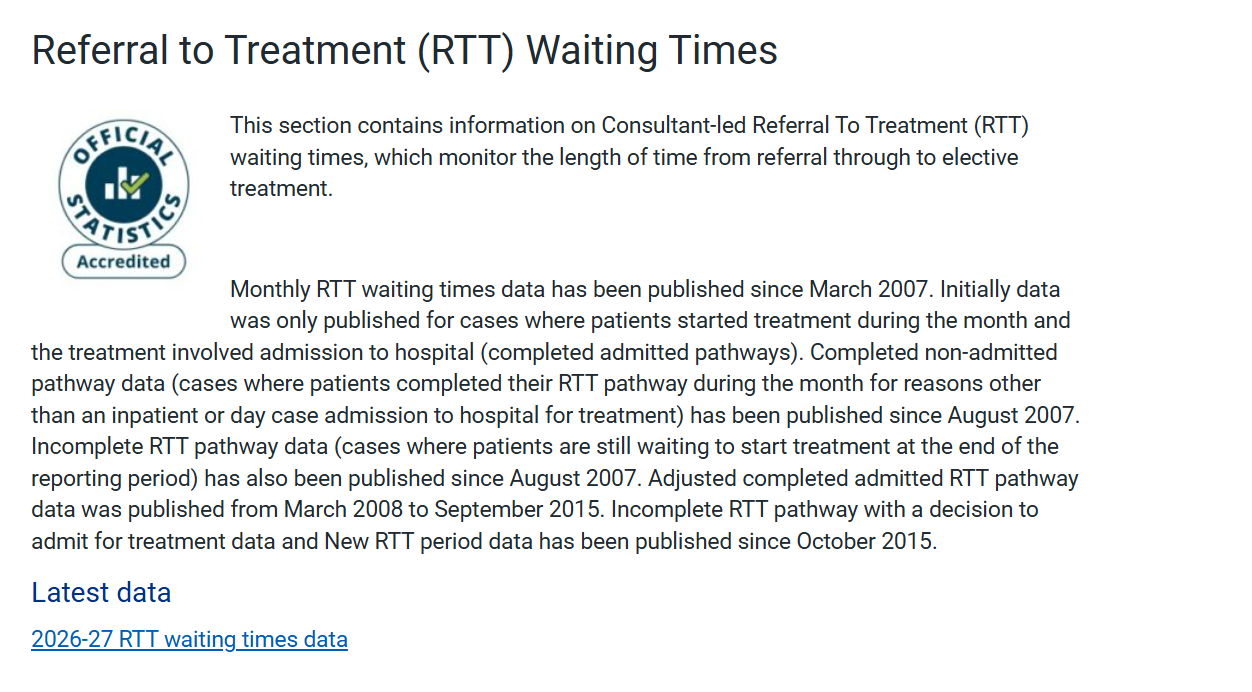
If you need treatment: Public NHS waiting list, with the parallel option of paying privately without losing NHS rights. Median wait: 11.9 weeks, 65.8% within 18 weeks (June 2026, all specialties).*
Financing: Mandatory social insurance (GKV, ~90% of the population) or private insurance (PKV). (vdek, 2026)
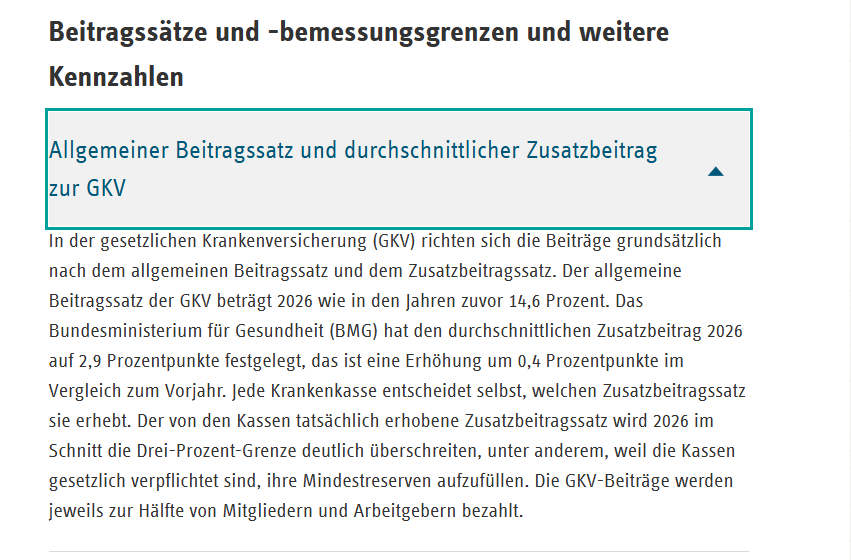
Layer A: 14.6% general rate + 2.9% average additional contribution = ~17.5% total, split equally between employer and employee.
If you need treatment: No centralized public waiting list like the NHS. Average time to a specialist appointment (not treatment): 42 days.*
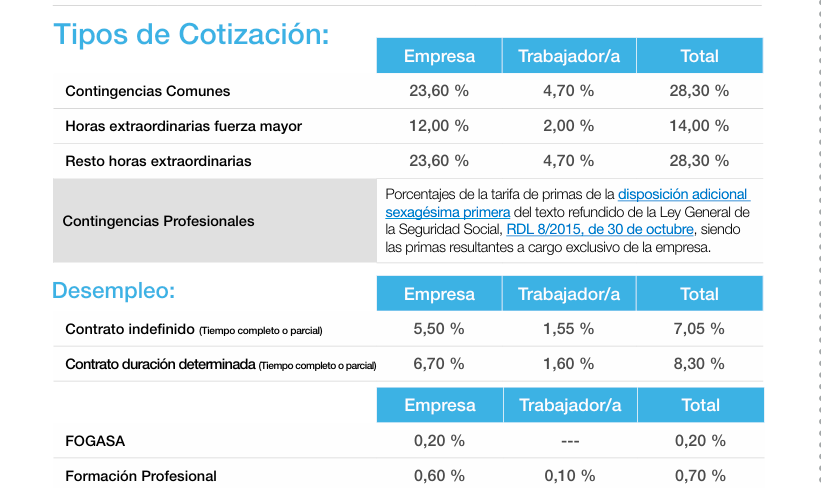
Financing: Social Security (Sistema Nacional de Salud), via the Contingencias Comunes contribution — 28.30% total (23.60% employer + 4.70% worker), 2026. (Ibermutua, Orden PJC/297/2026)
Layer A: This 28.30% is not exclusive to healthcare — it also covers sick leave, maternity/paternity, and more, all bundled into one rate.*
If you need treatment: Public waiting list managed regionally, with enormous variation (Madrid: 50 days; Andalucía: 173 days for surgery). Average wait: 121 days for non-urgent surgery, 102 days for first specialist consultation.
We tracked four uncomplicated, standard cases — the kind of procedure comparable across systems: an appendectomy, a hip replacement, a knee MRI without contrast, and a vaginal delivery.
| Treatment | US (Layer B, billed/cash) | UK (Layer C) | Germany (Layer C) | Spain (Layer C) |
|---|---|---|---|---|
| Appendectomy | $10,972 / $6,848 | $3,950 | $3,980 | $2,622 |
| Hip replacement | $23,550 / $14,428 | $14,849 | $7,681 | $6,780 |
| Knee MRI (no contrast) | $3,653 / $1,595 | $527 | $613 | $113 |
| Vaginal delivery | ~$13,000* | $3,002 | $1,361 | $2,175 |
UK/Germany/Spain figures are private insurance claims pricing (our Layer C) — not the public system's internal cost, which none of the three publishes in a comparable per-treatment breakdown (see below). US figures are Layer B, since the US base case is already employer/private insurance.
One pattern stands out immediately: Spain has the lowest private-market cost in three of the four treatments, and is essentially tied for lowest in the fourth. This alone complicates any simple assumption that lower cost means worse access — Spain is also one of only two countries in this investigation that measures and publishes real wait times through to treatment.
For the US, where we have all four cost figures, we calculated what David — our composite patient — would actually owe, using his real deductible ($1,886) and coinsurance (20%):
| Treatment | Listed | Negotiated/cash | Insurance pays | Patient pays |
|---|---|---|---|---|
| Appendectomy | $10,972 | $6,848 | $3,969.60 | $2,878.40 |
| Hip replacement | $23,550 | $14,428 | $10,033.60 | $4,394.40 |
| Knee MRI | $3,653 | $1,595 | $0 | $1,595 |
| Vaginal delivery | — | $13,000 | $8,891.20 | $4,108.80 |
Notice the MRI: the patient pays 100% of it, because the negotiated price doesn't clear the annual deductible — insurance pays nothing at all. Having insurance doesn't guarantee it actually pays for a given visit; it depends entirely on where you are in your deductible year.
| Treatment | US | UK | Germany | Spain |
|---|---|---|---|---|
| Appendectomy (emergency) | Immediate via ER in all four countries — no elective wait applies | |||
| Hip replacement (elective) | 24.1 days* | 11.9 weeks (median) | 42 days* | 121 days |
| Knee MRI / Vaginal delivery | No comparable per-procedure wait-time data found in any of the four countries — stated as a limitation, not estimated | |||
*Only the UK and Spain measure and publish wait time through to actual treatment. The US and Germany figures measure time to the first specialist appointment — a different, earlier point in the process. Comparing the raw numbers side by side would suggest the US and Germany are faster; in fact, we simply don't know how long US and German patients wait for the hip replacement itself, because neither country publishes that figure the way the UK and Spain do. That gap in transparency is itself one of this investigation's findings.
The enhanced ACA premium tax credits — created in 2021 (American Rescue Plan), extended in 2022 (Inflation Reduction Act) — expired on December 31, 2025. The Senate fell short of the 60 votes needed to extend them (51 votes, with 2 Republican senators and 4 House Republicans crossing party lines to support extension), tangled with a partial federal government shutdown.
According to the CBO, premiums for subsidized enrollees rose an average of 114% as a result, with 4.2 million more people projected to become uninsured by 2034–2035.
David's own employer-sponsored plan doesn't depend on these Marketplace subsidies — but if he lost his job and had to buy an individual plan on the Marketplace, this change would hit him immediately.
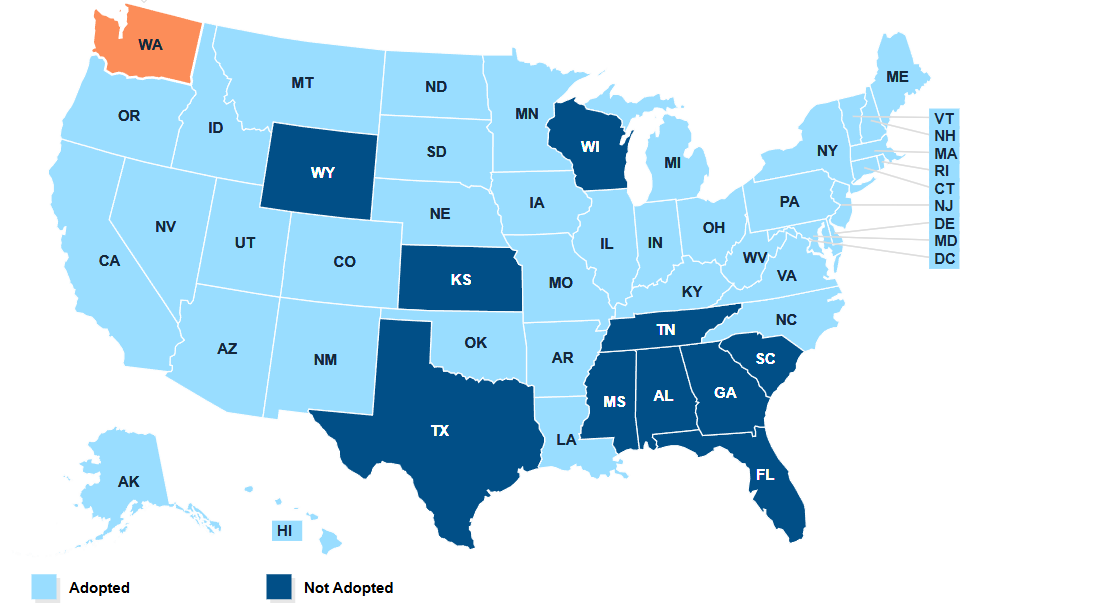
Separately, Medicaid expansion remains a state-by-state decision: 10 states have not adopted it (Wyoming, Kansas, Wisconsin, Texas, Mississippi, Alabama, Georgia, South Carolina, Tennessee, Florida), all under state governments that declined it at the time of the decision; 41 states have.
What hasn't changed: the ACA's protection against denial or higher pricing for pre-existing conditions, dependent coverage to age 26, and the ban on lifetime coverage limits — these structural protections remain in place regardless of the subsidy fight.
The following cases are drawn from official rulings, regulator findings, and documented reporting — not composites. Each one is covered in full detail, with its primary source, on Kibbo's Real Cases section.
A consultant refused to consider a patient for hip surgery based on her BMI alone, without a physical examination. Scotland's Ombudsman found the assessment was never actually carried out — and ordered the health board to pay for the private surgery she'd been forced into.
A 71-year-old was told her only real options were an 18-month wait or paying privately. She chose to pay — nearly £28,000 for both hips. A concrete price on what this investigation's wait-time data only shows in the abstract.
An elderly patient was transported by Spain's public health service, then admitted as a "private patient" for a single room — without being told that would trigger a bill for the emergency care itself. The Defensor del Pueblo recommended that it be cancelled.
A Málaga court declared null and abusive the standard clause forcing patients to personally cover whatever their insurer refuses to pay — a final first-instance ruling that other patients can point to.
A fully-insured 20-year-old's emergency appendectomy was billed at $55,029 — including $7,501 for two hours in a recovery room. His actual bill shows exactly how a hospital's listed price and what a patient owes can diverge.
Without an insurer negotiating on his behalf, an uninsured veteran's appendicitis complications left him owing far more than any insured patient would have paid for the same two surgeries.
A family's first delivery cost $30. Their second — medically identical, at the same hospital — was coded through the ER because of which door was open during the pandemic, and billed at over $16,000.
We could not find a documented, equivalent case for Germany — stated here explicitly rather than filled with a weaker substitute.
Want to see what happened when someone actually used one of these? Read what the Scottish Ombudsman decided after a patient filed exactly this kind of complaint.
58 data points across 4 countries, 4 treatments, and 3 cost layers, cross-checked against primary sources, with every unverifiable gap explicitly marked rather than estimated.
Download the full dataset (CSV) →Methodology, sources & column notes (README) →
See all datasets in Kibbo's Consumer Data Library →